Repair or Replace? A Real Story From Under an LA Sink
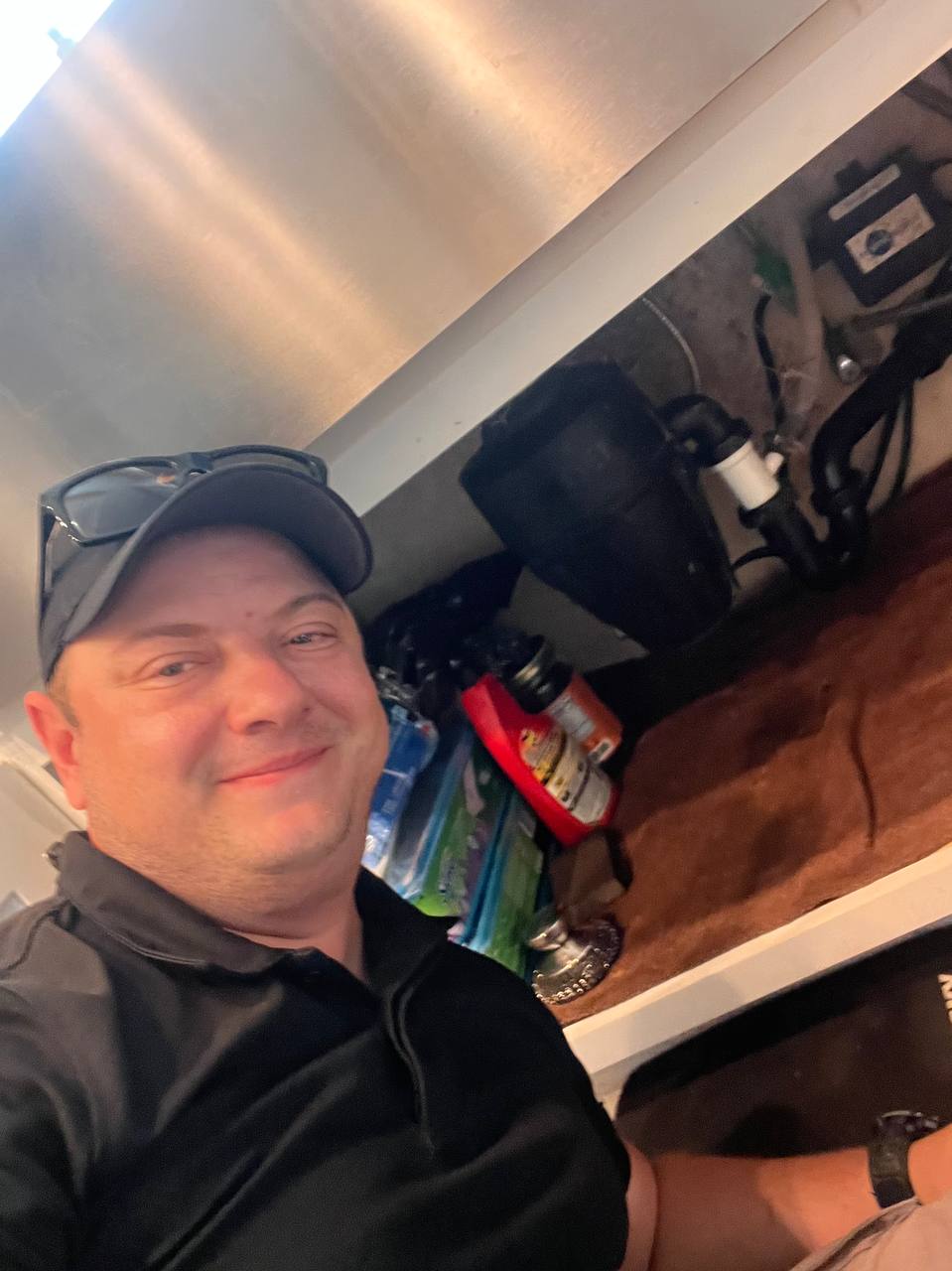
Hi — this is one of those stories I tell homeowners on the phone almost every week, so I figured I'd write it down. It's about when it actually makes sense to repair a garbage disposal in Los Angeles versus when replacement is the only honest recommendation. The short version: age, corrosion, and whether the motor still turns freely decide almost every call. The long version is below, told from a real job I did in Central LA.
THE CALL: 'IT WON'T TURN ON AT ALL'
The homeowner called on a Tuesday morning. She'd just moved back into a house that had been sitting empty for close to a year while it was being staged for sale. First time she flipped the disposal switch — nothing. No hum, no click, no water leak. Just a dead switch.
On the phone I already had a strong guess. A disposal that sits unused for months in an LA kitchen — especially one under a stainless sink where a little humidity always lingers — is a prime candidate for a seized rotor. The impeller plate literally rusts to the grind ring, and no amount of switch-flipping will free it. But you don't diagnose from the driveway. I told her our travel and diagnostic fee ($75), she said come out, and I was there in about 40 minutes.
WHAT I ACTUALLY FOUND UNDER THE SINK
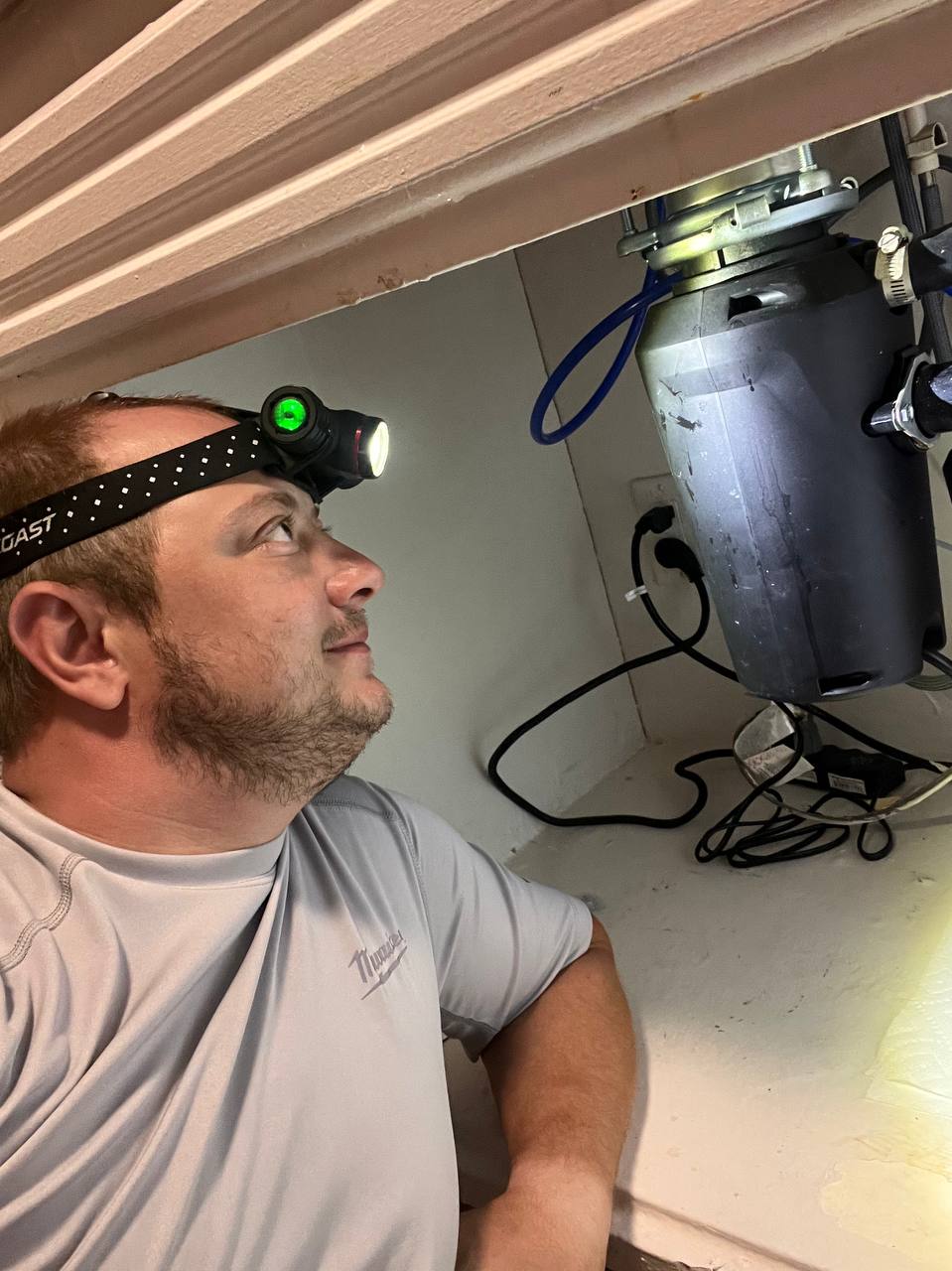
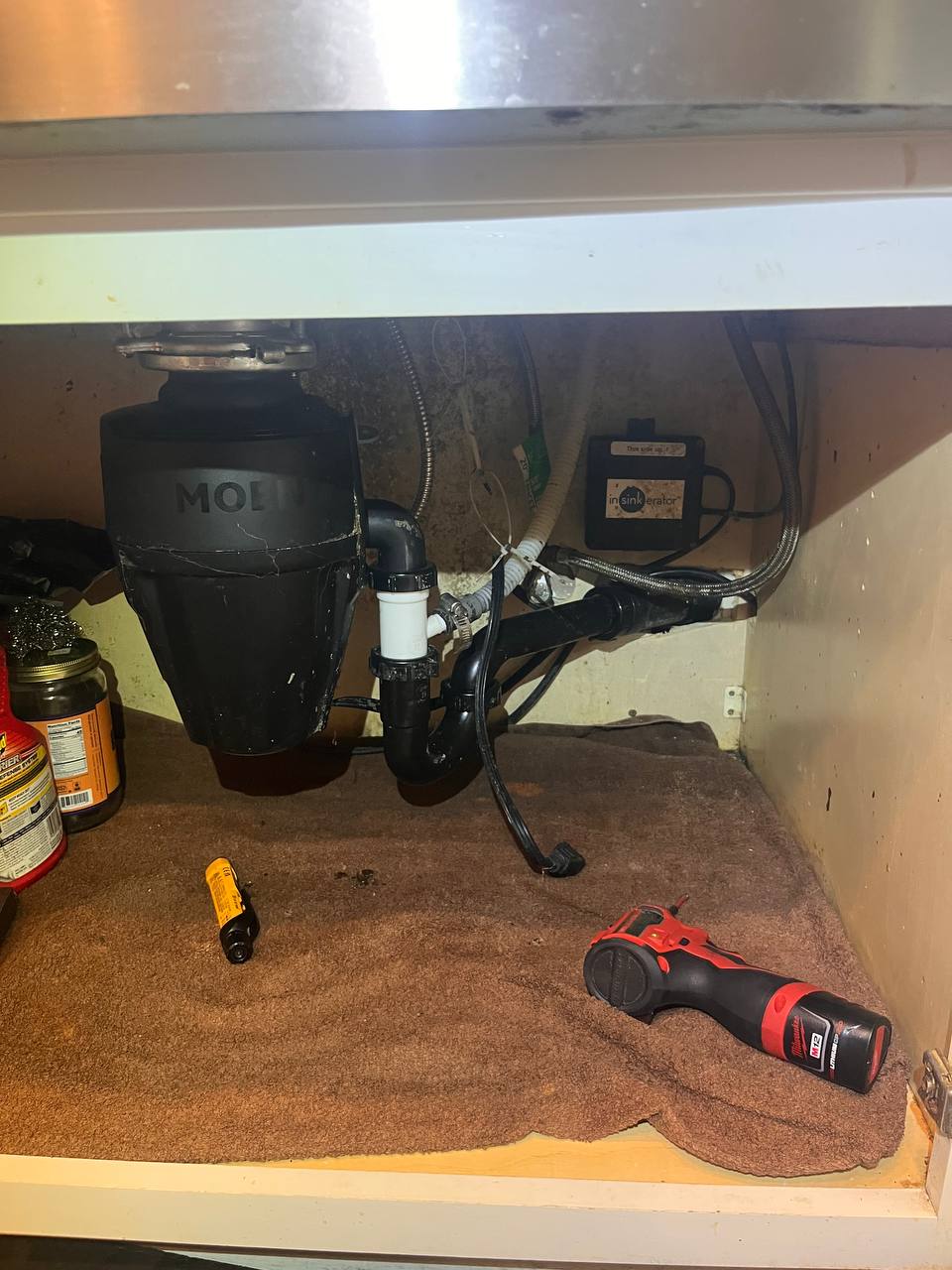
I always start the same way: pull everything out of the cabinet, put a headlamp on, and get eyes on the unit before I touch a single tool. This one told me the story before I ever unplugged it.
It was a builder-grade 1/3 HP disposal, probably original to the house — call it 12+ years old. The bottom shell had that dusty orange bloom of surface rust that means moisture has been sitting on the steel for a long time. The reset button was popped out. The dishwasher hookup nipple had a small green corrosion ring around it. And when I put an Allen key in the bottom socket and tried to rotate the motor by hand — the standard 'is it seized?' test — it wouldn't budge. Not stiff. Locked.
That's the moment a good tech has to be honest with the customer. Because at that point, there are really only two paths, and one of them is a waste of her money.
WHEN REPAIR IS THE RIGHT CALL
Before I explain what I told her, here's the honest list of situations where I'll repair a disposal instead of pushing replacement. If any of these describe your unit, repair is usually the smart move:
- Unit is under 6–7 years old and the shell is clean, no rust bloom
- Motor turns freely with an Allen key from the bottom (not seized)
- The issue is a tripped reset, a jam from a bone or utensil, or a loose mounting ring
- Leak is coming from a replaceable point — dishwasher hookup, discharge tube gasket, sink flange bolts
- Brand and model still have parts available (most InSinkErator Evolution, Moen EX, Waste King L-series)
- You just want another 3–5 years out of it before a planned kitchen remodel
WHEN REPLACEMENT IS THE ONLY HONEST ANSWER
And here's the other side of the list — the situations where I will tell a customer, plainly, that repairing this unit is throwing money away:
- Motor is seized and won't rotate even with the manual wrench (like the one in this story)
- Visible rust on the bottom shell or corrosion around the seal ring — the internal seals are almost certainly compromised too
- Water is dripping from the body of the unit itself (not a fitting) — the housing has failed
- Unit is 10+ years old and any major component has already been replaced once
- It's a 1/3 HP builder-grade Badger-class unit that's been sitting unused for months in an empty LA home
- The reset button trips within 30 seconds every time you power it on — motor windings are cooked
WHAT I TOLD THE HOMEOWNER — AND WHY
I showed her the seized rotor. I showed her the rust. I showed her the popped reset that wouldn't stay in. And I told her straight: 'I can absolutely try to repair this. It'll take an hour of labor, I'll probably free the rotor with penetrating oil, and there's maybe a 40% chance it runs for another six months before the motor windings give out. Or we replace it today with a proper 3/4 HP unit and you're done thinking about this for the next 10–12 years.'
That's the conversation. It's not a hard sell — it's just math. Repair labor on a dying unit is $99. A full replacement — new InSinkErator Evolution Essential XTR, new mounting, new dishwasher hookup, full test — is $249 labor plus the unit. She looked at the two numbers, looked at the rusted shell, and said 'replace it.' We were done in about 55 minutes, and I hauled the old unit away.
WHY LA HOMES ARE ESPECIALLY PRONE TO THIS
Two things about Los Angeles conspire against garbage disposals more than most cities. First, our tap water is hard — 12 to 16 grains per gallon depending on your neighborhood. That mineral load slowly builds scale on every internal surface. Second, we have a lot of homes that sit empty for stretches at a time — vacation properties, staged listings, tenant turnovers between renters. A disposal that goes 6+ months without being run in an LA kitchen very often comes back seized.
If you're moving into a home that's been empty for a while, don't just flip the switch. Look under the sink first. If you see rust bloom on the shell, corrosion on the fittings, or a popped reset button, call us before you turn it on — you'll save yourself a tripped breaker and possibly a small leak.
WHAT THE HONEST NUMBERS LOOK LIKE IN 2026
Since I mentioned pricing in the story, here's the full breakdown so you know what to expect on a real service call in Los Angeles:
- Travel & diagnostics: $75 (always applies)
- On-site repair, no replacement needed: $99 flat, plus the $75 travel & diagnostic fee
- Full disposal replacement labor: flat $249 (any brand, any HP)
- New disposal unit: $110–$450 depending on HP and brand (we can supply or you can)
- Same-day service across Glendale, Pasadena, Burbank, Encino, Studio City, Central LA and the rest of our 10-city area
- 1-year workmanship warranty on every replacement
THE 30-SECOND SELF-CHECK BEFORE YOU CALL
Before you pick up the phone, here are the three things you can safely check yourself — they take about a minute total and often save a service call:
- Press the red reset button on the bottom of the disposal. If it clicks in and stays, try the switch again.
- Look under the sink with a flashlight — any water on the cabinet floor? Any orange rust bloom on the disposal shell?
- If you have the little Allen key that came with the unit, insert it in the socket on the bottom and try to rotate. If it spins freely, the motor isn't seized. If it won't move, that's the story I just told you.
FREQUENTLY ASKED QUESTIONS
Is it always cheaper to repair than replace?
No — and that's the whole point. A $99 repair on a 12-year-old rusted unit that fails again in 6 months costs more than a $249 replacement that lasts 10 years. Age, corrosion, and whether the motor is seized decide the math.
How long should a garbage disposal last in Los Angeles?
In LA hard water, 8–12 years for a mid-range unit is normal. Homes with a whole-house water softener routinely get 15+ years. Builder-grade 1/3 HP units in rental homes often fail by year 7.
The unit was working before the house sat empty — can it come back?
Sometimes, if the rotor freed up but nothing corroded. Often not — moisture sitting on internal steel for months causes rust that seizes the impeller. The manual Allen-key test tells us in 30 seconds.
Do you charge the travel fee if I decide to replace?
No. The $75 travel & diagnostic fee applies to every visit and is never waived or credited toward the job.
READ NEXT
NEED HELP WITH YOUR DISPOSAL?
Same-day service in Los Angeles. Honest pricing, 1-year guarantee.
Call (619) 626-3542